

A Closer Look – How the Microbiome Trains the Immune System: Why Timing Is Everything
A conversation with Michael Silverman, MD, PhD, attending physician with the Division of Infectious Diseases at the Children's Hospital of Philadelphia
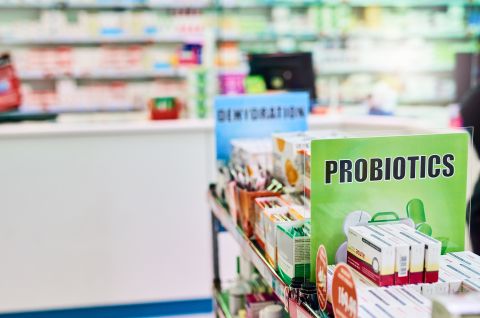
Walk down the supplement aisle of any pharmacy, and you’ll find probiotic capsules promising to boost immunity and improve gut health. Probiotics are live microorganisms — beneficial bacteria — that can support the microbial community already living in your gut. But everybody has their own unique makeup of microbes, collectively known as the microbiome, and most probiotics don't stay in the body long enough to make a difference. For a microbe to integrate into the gut community, scientists need to understand not just which microbe to introduce but whether that individual's microbiome even needs that microbe.
For most people, the invisible world of microbes living in and on the body goes entirely unnoticed. To better understand how gut microbes shape the developing immune system and what that means for the future of probiotics and disease prevention, we spoke with Michael Silverman, MD, PhD. Dr. Silverman is an attending physician in the Division of Infectious Diseases at the Children’s Hospital of Philadelphia (CHOP). His lab sits at the crossroads of microbiology, immunology and detective work.
A Democracy of Microbes
One hundred trillion bacteria live in and on a typical adult’s body, vastly outnumbering the roughly 35 trillion cells that make up the body. "If it were a democracy," Dr. Silverman says with a chuckle, "the bacteria would get to decide what we do each day." Dr. Silverman has spent years trying to understand exactly how these microbes shape the developing immune system of infants and young children.
The microbes that make up the microbiome are not invaders; they are commensals, meaning they have evolved with us, and we benefit from each other. Dr. Silverman says we begin acquiring them at birth. In a vaginal delivery, a newborn’s first microbial exposure comes from the mother’s birth canal. Babies born by cesarean section take a different path, picking up more skin-associated bacteria at the start. Their microbiomes differ for a short period but eventually become somewhat similar.
While similar, there are small differences in early life that could influence the developing immune system. Dr. Silverman explains, “If you start with a different set of [microbes], you might end up with a different immune system.” Things like early-life antibiotics, formula versus breastfeeding and the timing of the introduction of solid foods can impact the developing microbiome.
Is “Weaning the Time for Intervening”?
Dr. Silverman is particularly interested in the critical point when babies move from consuming only breast milk or formula to also eating solid foods — a time called “weaning.” Introducing solid foods changes the nutrition available to microbes in the gut, and that, he has found, plays a role in the developing immune system. “There’s epidemiologic data that [microbes] do matter; it falls under the idea that your microbiome educates your immune system.”
Weaning doesn’t just change what a baby is eating; it also changes what the microbes eat, leading to what Dr. Silverman describes as “an explosion of new diversity.” As he sees it, “Wonderful new microbes come in, and they seem to have important effects on the developing immune system.” When a child begins eating solid foods, not only do new microbes show up, but so do new immune cells that are important for lifelong immunity to diseases, including autoimmune diseases. Through his research, he thinks weaning, the microbiome, and the immune system are related — weaning allows the microbiome to flourish, and the microbiome informs development of the immune system.
The emergence of new microbes in the gut sends signals to the immune system. Dr. Silverman says, “[These signals] help things like regulatory T cells, which are really important for preventing autoimmunity, and IgA antibodies, which are a really important antibody for our gut.” He continues, “All these things really get triggered by that weaning process.”
In his lab, this has become something of a mantra: “Maybe weaning is the time for intervening.” It’s a joke, but it’s also a hypothesis backed by data.
A Model Microbiome
Dr. Silverman’s team wanted to know how exactly microbes educate or communicate with the immune system. To answer that question, they had to confront the complexity of both the immune system and the microbiome. That meant they had to simplify the system. To do this, they used germ-free mice — mice whose bodies have never encountered a microbe. And they developed a model system carefully selected to represent the composition and function of an early-life microbiome — a collection of nine bacterial strains, called Pediatric Community (PedsCom).
The bacteria were introduced into female, germ-free mice. When those mice reproduced, they passed the nine bacteria to their offspring. These nine bacteria were the only ones that colonized the gut microbiome. “With nine microbes, you can actually get a really good representation of how an early-life microbiome will work,” Dr. Silverman says. With a model established, the lab could begin exploring how an early-life microbiome interacts with the immune system and what this means for the development of certain diseases.
From High Risk to Low: A Diabetes Breakthrough
Dr. Silverman’s lab has been able to learn more about specific diseases using his PedsCom microbes. For example, they used a mouse model related to type 1 diabetes, an autoimmune disease in which the immune system attacks insulin-producing cells. When these specialized mice were given the PedsCom microbes, they were less likely to develop symptoms of disease.
There are still missing pieces in identifying what’s happening, but T cells appear pivotal. The team has found that specific microbes exert control over the function of T cells. “Whenever a T cell gets turned on, there has to be a way of turning it off,” Dr. Silverman says, “or else we would just be a whole mess of T cells causing lots of trouble. So, we think the microbes are helping to enhance that signal to turn the activated T cells down and restrain those T cells.”
Digging deeper, the team identified three specific microbes within PedsCom that appear to be key communicators with the immune system and induce positive responses. When those three were removed from the nine-member community, protection from type 1 diabetes disappeared. When those three microbes were present, the disease was not. While Dr. Silverman and his colleagues have been able to demonstrate that the makeup of the microbiome matters, they are also working to understand the importance of timing.
To understand whether the timing of microbiome development affects the immune system and the likelihood of developing type 1 diabetes, the team introduced the PedsCom microbes to the specialized mice at different ages. “Give these microbes to the … mice when they're six weeks of age as opposed to when they're born,” Dr. Silverman says, “and you don't protect them.”
“The same exact microbes at a different time window may have a really beneficial effect or no effect at all,” Dr. Silverman says. “And as we design probiotics and molecular microbial medicines, I think we need to take into account when you should see these things, if they’re going to help you out.”
In mice, weaning happens around three weeks. In humans, solid food is typically introduced around 4 – 6 months of age, with breastfeeding often continuing through the first year. The timelines don’t align precisely, but there appears to be a critical developmental window during which microbial exposures have more powerful effects on the immune system.
Dr. Silverman still has many questions, but he’s hopeful that manipulating the microbiome in early life could offer better protection for people prone to autoimmune diseases.
Designer Microbes?
Could bacteria be the key to preventing some diseases?
Imagine a world where a child born with genetic risk factors for type 1 diabetes has their microbiome sampled in early infancy so scientists can identify what’s missing from their microbial community and which signals aren’t being sent to their immune system. Before the child ever gets sick, clinicians introduce the right microbes during the right developmental window to steer the immune system away from autoimmunity.
“The best way to treat a disease is to not get it,” Dr. Silverman says. “Vaccines are great examples of that.” In his framing, microbial medicine could become a new category of prevention aimed at the immune system’s earliest conversations with the microbial world inside us.
The vision Dr. Silverman is working toward is something like a personalized microbial prescription — sample a child’s microbiome, identify what’s missing, and introduce the right microbes at the right time. “We need to understand what microbiome you have, how it’s been changed, to then know what the right probiotic or nutrient is to help your microbiome get to a healthy state.” This brings us back to the probiotics available today. They’re everywhere — in grocery stores, pharmacies and in social media ads — we are inundated with the promise that a probiotic is essential for good health. But do they help? Dr. Silverman isn’t convinced, “Your microbiome is an ecology. It’s like a big jungle full of organisms.” Adding a probiotic and expecting it to take hold is like releasing a single plant species into a dense rainforest and hoping it thrives. Most probiotics, he says, don’t even stick around. “You take the pill, and it just passes right through.” For a microbe to truly integrate into the gut community, scientists need to understand not just which one to introduce, but whether that specific individual’s microbiome has conditions to retain it. Dr. Silverman’s vision may not be far off.
"Science is cool," Dr. Silverman says. "We're trying to understand what can appear miraculous."
Related resources
Silverman Laboratory (Webpage, CHOP Research Institute)
“Many U.S. babies may lack gut bacteria that train their immune systems” (Article, ScienceNews.org)
“Baby’s microbiome may protect against childhood viral infection” (Article, Wellcome Sanger Institute)